Concreting
Concrete Pathways and Footpaths Bulimba.
Concrete Pathways and Footpaths in Bulimba
A cracked garden path or a muddy side-access track might not feel urgent, but it becomes a problem fast, especially in a Brisbane wet season. For homes in Bulimba, Hawthorne, Norman Park and the surrounding Inner East suburbs, a well-poured concrete pathway does three things: it keeps mud off your floors, makes the property safer underfoot, and holds its shape for decades without much fuss.
This page covers what the work actually involves, what you can expect to pay, and how to tell whether a new path pour is what your property needs.
What the Work Involves
Laying a concrete pathway is more involved than tipping a bag of ready-mix into a frame. A typical job runs through these stages:
- Site preparation. The area is excavated to the right depth, usually 75-100 mm for a pedestrian path, and compacted to give a firm base. Soft or unstable ground takes longer to prepare.
- Formwork. Timber or steel edging is set at the correct grade to control the shape and fall. For sloped Bulimba blocks, this step matters a lot, as you want water to run away from structures, not pool against them.
- Reinforcement. Most residential paths use steel mesh or bar (reo bar) laid before the pour to reduce cracking over time.
- Concrete placement. Ready-mix concrete is delivered by truck or, on narrow side-access jobs, mixed and wheelbarrowed in. A common residential mix is 20-25 MPa, though 32 MPa is sometimes specified for heavier use.
- Finishing. The surface is floated and then textured. A broom finish is the most practical choice for Brisbane's wet season because it adds grip. An exposed aggregate finish is available if you want something that matches a decorative patio.
- Curing. The slab needs time and, in hot Queensland weather, a curing compound or wet hessian cover to stop the surface drying too fast and cracking.
On a straightforward suburban job, a crew of two can typically pour and finish a standard side-access path in a single day.
When a Bulimba Home Actually Needs This Work
Not every uneven path needs replacing. Here are the signs that a proper concrete pour is the right call rather than a patch:
- The existing path (if there is one) has multiple cracks wider than about 5 mm, or sections that have heaved or sunk.
- Tree roots, common near jacarandas and Moreton Bay figs planted throughout the Inner East, have lifted or broken slabs and the problem will keep recurring.
- There is no formed path at all, and the side access becomes a slipping hazard or a muddy channel every time it rains.
- A Queenslander renovation has changed how people move around the block, and the old path no longer goes where it needs to.
- Council stormwater or driveway work has left a gap in the hard-surface network around the property.
If the damage is isolated to one or two small sections, a resurfacing or repair job may cost less. That is a separate service and worth asking about before committing to a full pour.
What It Typically Costs
For residential pathways in the Bulimba cluster, most jobs fall somewhere between $1,500 and $6,000, depending on several factors.
What moves the price:
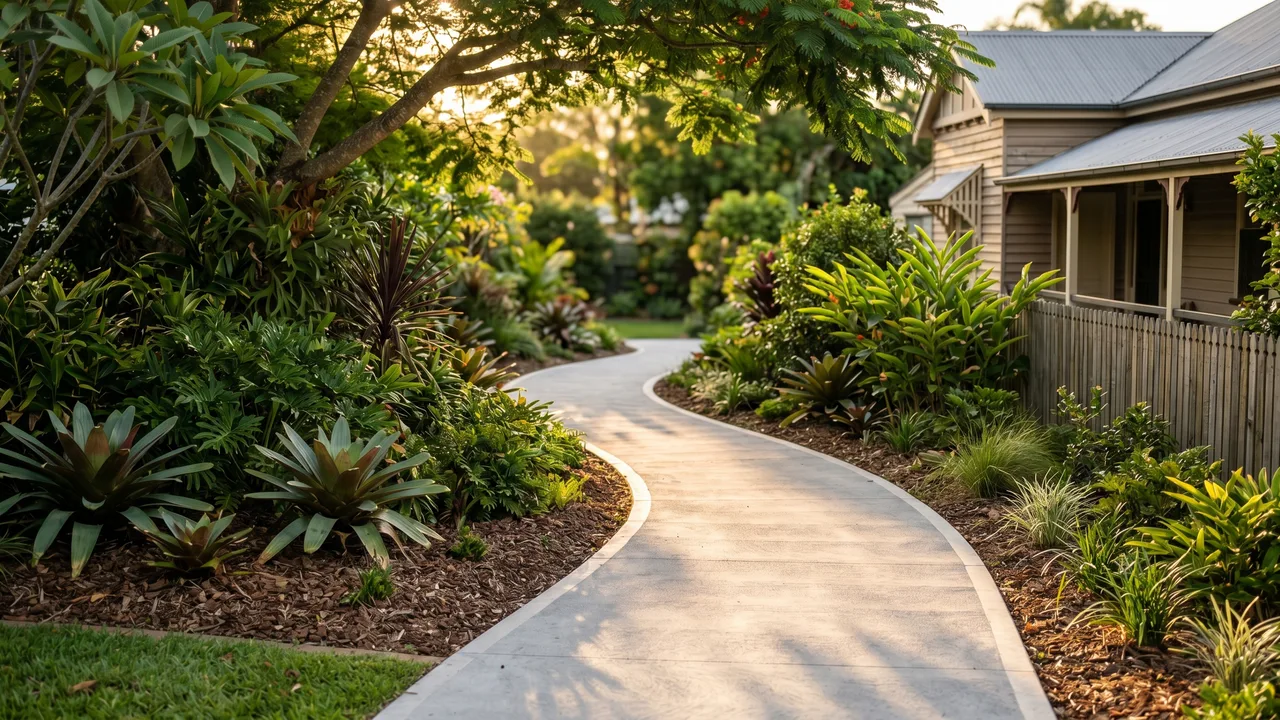
- Length and width. A 1-metre-wide side-access path from gate to back fence costs far less than a sweeping garden path that winds around a large block.
- Access. Tight side accesses in Hawthorne or Balmoral terraces sometimes mean no truck can get close, so concrete has to be carted in. That adds labour and time.
- Site preparation. Rocky ground, old concrete that needs breaking up and removing, or tree root issues all increase the prep cost.
- Finish type. A broom finish is the base price. Exposed aggregate, slate impressions or similar decorative finishes cost more.
- Soil conditions. Clay-heavy soil, common in parts of Morningside and Cannon Hill, may need more compaction work or base material.
What's Usually Included and What Costs Extra
Most quotes from local concreters for a standard pathway job include: excavation to the required depth, supply and placement of formwork, steel mesh reinforcement, concrete supply and pour, a standard broom or similar finish, and basic clean-up.
Things that typically cost extra or need a separate discussion: removal and disposal of an existing concrete path, landscaping around the edges after the job, any drainage work (pits, channel drains), and council-side footpath works if the project touches the nature strip. Always ask the contractor to spell out what sits inside the quote and what does not.
Is This the Right Service for Your Property?
A concrete pathway is the right choice if you want a durable, low-maintenance surface you won't need to replace or weed for many years. It suits most Bulimba and Inner East blocks well because the combination of clay soils, tree canopy and heavy summer rain means looser surfaces like gravel shift and wash out over time.
If your block is steep, ask specifically about the drainage plan. Concrete is unforgiving if water is directed the wrong way.
A Note on Safety, Insurance and Qualifications
Concreting in Queensland sits in a range of licence categories depending on project value and scope. For most residential pathway work, the contractor should carry public liability insurance, and you are entitled to ask for evidence of that before work starts. It is also reasonable to ask whether they hold a current Queensland QBCC licence if the job is part of a larger building project. A straightforward conversation before you sign anything is the simplest way to protect yourself.
We connect you with local providers who have been through a basic vetting check. That is not a guarantee of workmanship, but it does mean you are not starting from scratch with a cold search.
If you want a quote for a pathway job in Bulimba or the Inner East, get in touch and we will pass your details to a relevant local contractor for a no-obligation measure and price.
Quick answers
Frequently asked.
How long does a concrete path take to cure before I can walk on it?
Can a concrete path be laid on a sloped Bulimba block?
Do I need council approval for a garden path or side-access walkway?
What's the difference between repairing an old path and pouring a new one?
How wide should a side-access path be in a typical Inner East home?
Does tree root damage keep coming back after a new concrete path is poured?
Ready to book
Quickest is by phone.
Up-front pricing on the call. Booked in one go. No site visit needed.