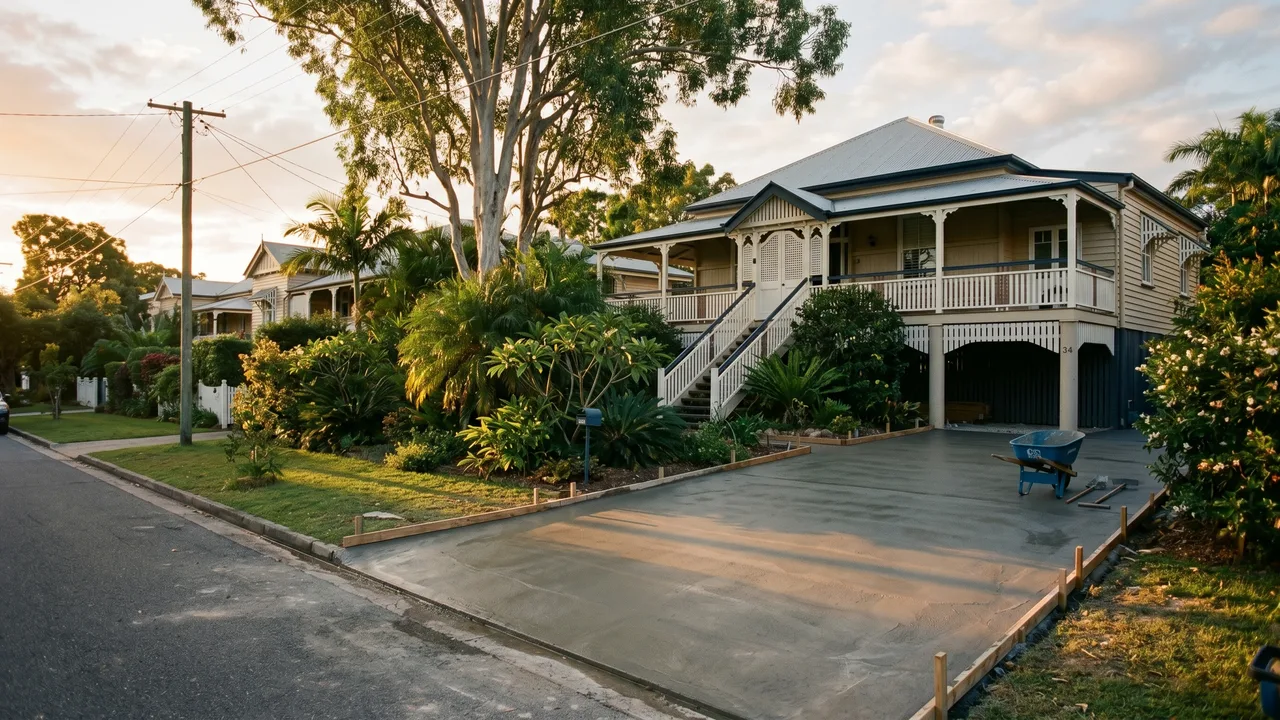
Concreting
Concrete Driveways Bulimba.
New Concrete Driveways in Bulimba and the Inner East
A new concrete driveway is one of the more straightforward jobs in residential concreting, but there's still a fair bit that goes into doing it properly. Here's what the work actually involves, what it costs in this part of Brisbane, and how to tell whether a full pour or replacement is the right call for your place.
What the Work Involves
A driveway pour starts well before the concrete truck arrives. The concreters will:
- Strip and excavate the existing surface (if it's a replacement) and remove the spoil
- Set up formwork (timber or steel edging) to define the shape and thickness
- Compact the sub-base, usually with a plate compactor, to prevent future settlement
- Lay reinforcement — typically F72 or F82 steel mesh, or reo bar on heavier-use driveways
- Pour and screed the concrete to a consistent level
- Finish the surface — broom finish is the standard for grip; exposed aggregate or stencilled finishes cost more
- Cut control joints once the slab starts to cure, to manage where cracking occurs naturally
- Seal the surface (sometimes included, sometimes quoted separately)
In Bulimba and surrounds, most residential driveways sit between 100 mm and 125 mm thick. Queenslander homes on stumps often need a steeper gradient and a drainage channel at the kerb to stop water pooling under the house. That's worth flagging early with your concreters.
When You Actually Need It
Not every cracked driveway needs a full replacement. As a rule of thumb:
- Surface crazing or minor cracking — resurfacing or crack repair is often enough (see our Concrete Repairs and Resurfacing page for that option)
- Heaving, sinking or significant structural cracking — these point to sub-base failure, which means a new pour is the practical fix
- Tree root damage — common in older streets around Norman Park and Hawthorne with large street trees; roots can lift slabs considerably
- An old bitumen or exposed aggregate driveway that's crumbling — replacement makes more financial sense than patching repeatedly
There's no fixed lifespan, but a well-laid concrete driveway typically lasts 25 to 40 years in Brisbane's climate. The Inner East's clay soils can move more than sandy coastal soils, so a poorly compacted sub-base will show problems sooner.
Summer wet season is generally a slower time for pours because of the rain risk during curing, but jobs still run year-round. Good concreters will schedule around the forecast.
What It Costs in Brisbane's Inner East
For a standard residential driveway in Bulimba, Morningside, Cannon Hill or the nearby cluster, you're typically looking at:
- Single car (around 20-30 m²): $2,500 to $5,000
- Double car (around 40-60 m²): $4,500 to $9,500
- Longer or wider runs, steep slopes, or decorative finishes: $8,000 to $15,000+
These are indicative figures based on typical Brisbane residential jobs. Your actual quote will depend on a few things:
- Access — tight side gates or overhanging trees can slow the pour and add labour
- Demolition and removal — ripping up an old slab and carting it away adds to the cost
- Gradient — a steep block in Balmoral or Bulimba may need extra formwork and drainage work
- Finish — broom is cheapest; exposed aggregate or stencil adds $30 to $70 per square metre roughly
- Concrete grade — most residential driveways use 25 MPa or 32 MPa mix; higher grades cost more
What's Usually in the Quote (and What's Not)
A typical quote from a local concreters should cover: excavation, formwork, reinforcement mesh, the concrete supply and pour, screeding, finishing, and control joint cutting.
Things that sometimes fall outside the base quote:
- Concrete sealer (ask upfront)
- Removal of an existing timber edging or garden bed that's in the way
- Any stormwater or drainage modifications
- Council permits (rarely needed for a standard residential driveway in Brisbane, but worth confirming)
Always ask for an itemised quote so you know exactly what's included.
Is a Full Replacement Right for Your Property?
A good concreters will be honest about this. If you've got isolated surface damage but a solid sub-base, repairs or resurfacing will save you money. If the slab is heaving, cracked through its full depth, or the base material has washed out, patching is throwing good money after bad.
For most older homes in Hawthorne, Morningside and Bulimba, we see a mix of both situations. The best way to know is to have someone physically look at the slab, check for hollow spots (a quick knock test), and assess the drainage around the edges.
A Note on Safety and Qualifications
Concreting isn't licensed trade work in Queensland the way electrical or plumbing is, but that doesn't mean anyone with a mixer should be pouring your driveway. Look for concreters with public liability insurance (minimum $5 million is standard), an active ABN, and a track record of residential work in the area.
We connect Bulimba homeowners with local providers who carry appropriate insurance and have completed residential concrete work across the Inner East. If you want to check credentials yourself, QBCC (Queensland Building and Construction Commission) is the right place to start.
If you'd like a quote for a new driveway or a replacement pour, get in touch and we'll put you in contact with a local concreters who can have a look at your property and give you a straight answer.
Quick answers
Frequently asked.
How thick does a concrete driveway need to be in Brisbane?
Do I need council approval for a new concrete driveway in Bulimba?
How long does a concrete driveway take to cure before I can drive on it?
What's the difference between a broom finish and exposed aggregate for a driveway?
Can tree roots damage a concrete driveway, and what can be done about it?
Is concreting licensed work in Queensland?
Ready to book
Quickest is by phone.
Up-front pricing on the call. Booked in one go. No site visit needed.