Concreting guide
How Long Should a Concrete Driveway Last in Brisbane Conditions?
A Concrete Driveway in Brisbane Should Last 25 to 40 Years — If the Conditions Are Right
A well-built concrete driveway in Brisbane typically lasts 25 to 40 years. That's the honest answer. But "well-built" and "Brisbane conditions" are doing a lot of work in that sentence, and the gap between a 25-year driveway and a 40-year one almost always comes down to decisions made before the first truck arrives.
If you're in Bulimba, Hawthorne, Norman Park or anywhere across Brisbane's Inner East, there are a handful of local factors that genuinely affect how your concrete performs. This article breaks them down clearly so you can make a decent decision rather than just going with the cheapest quote.
What Actually Shortens a Concrete Driveway's Life
Concrete doesn't just fail randomly. There are patterns, and most of them are preventable.
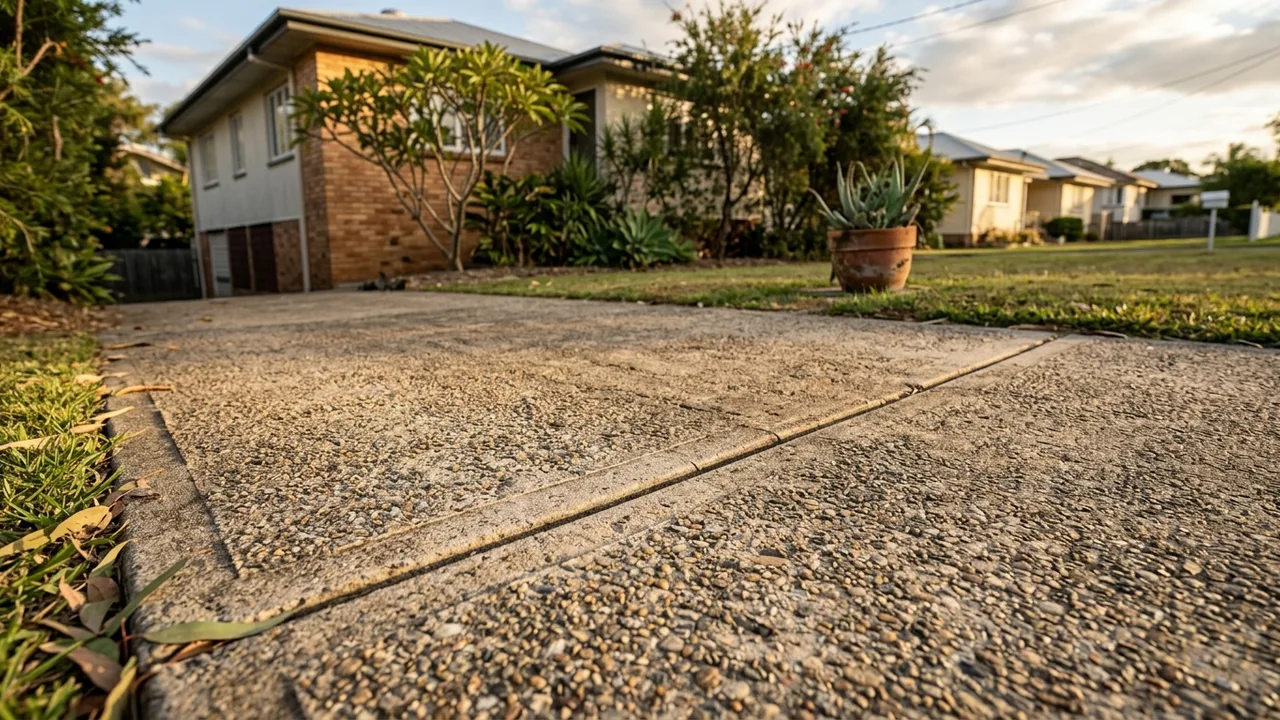
Tree roots are the most common culprit in the Inner West and Inner East suburbs. The character streets of Bulimba, Balmoral and Norman Park are lined with mature fig trees, poinciana and jacaranda. Their root systems are aggressive and shallow. A driveway laid without root barriers or adequate expansion joints next to a large street tree will crack, typically within five to ten years.
Sub-base failure comes second. Brisbane's Inner East has a lot of clay-heavy soil, particularly in the lower-lying parts of Morningside and Murarrie. Clay shrinks in dry weather and swells when it's wet. If the contractor doesn't compact and prepare the sub-base properly, that movement transmits directly into the slab above. You might not see the damage for a few years, but it's happening.
Inadequate thickness and mix strength. A residential driveway in Brisbane should typically be poured at 100mm thick, with a concrete mix rated at 25 MPa or higher. Some contractors cut costs by going thinner or using a weaker mix. The difference in material cost is modest; the difference in lifespan is significant.
Drainage. Brisbane gets intense summer rainfall, often 80 to 100mm in a single storm event. If water pools on the driveway surface or channels underneath the slab, erosion and freeze-thaw damage... well, we don't get freeze-thaw here, but subsurface erosion is still a real problem. Water sitting under concrete in clay soil creates exactly the conditions for movement and cracking.
How Brisbane's Climate Specifically Affects Concrete
Brisbane's subtropical climate is generally kinder to concrete than, say, Melbourne's temperature swings or the salt-air exposure of bayside suburbs like Manly or Redcliffe. Concrete in the Bulimba cluster doesn't face daily thermal cycling severe enough to cause expansion cracking on its own.
That said, the UV load here is intense year-round. Unsealed concrete surfaces absorb UV and heat, which causes the surface layer to degrade faster than the structural core. This is more cosmetic than structural for plain concrete, but it matters if you've invested in decorative finishes or exposed aggregate. Quality sealers, reapplied every three to five years, slow this process noticeably.
Summer heat also affects the pour itself. Concrete poured in the middle of a Brisbane January afternoon, in direct sun, can begin to cure too quickly on the surface. This leads to surface cracking that looks alarming but is often shallow. A competent concretor accounts for this by scheduling pours in the morning or later afternoon during hot months, and by curing the slab correctly with wet hessian or curing compound. If you're getting quotes during summer, it's worth asking how the contractor manages this.
The Role of Construction Quality (and How to Spot It)
The honest truth is that two driveways poured in the same street on the same day can have wildly different lifespans, depending on the tradesperson. Here's what separates a durable slab from one that's back on the skip truck in fifteen years.
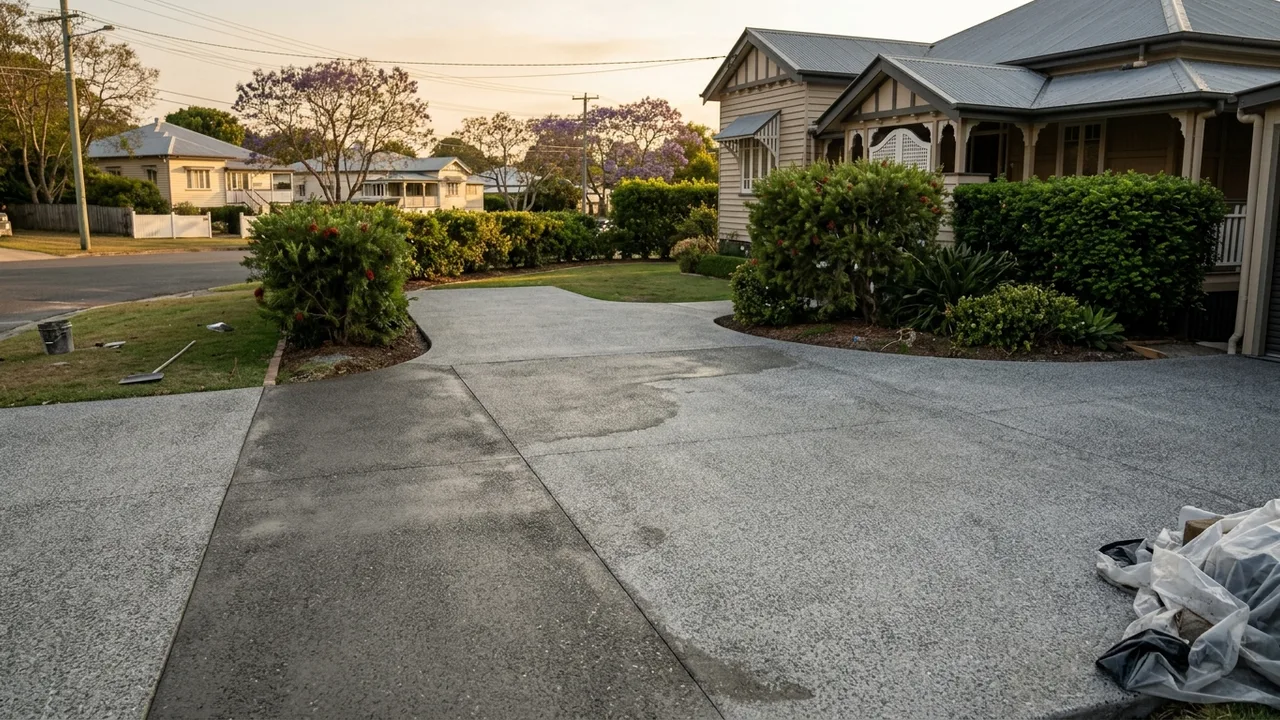
- Sub-base compaction. The base material (typically crushed rock or compacted fill) should be mechanically compacted, not just tamped by hand. Ask if they use a plate compactor or roller.
- Steel reinforcement. Standard residential driveways typically use SL72 or SL82 steel mesh. This controls cracking if movement does occur. Some contractors skip it on thin, short driveways to save money. That's a trade-off worth discussing explicitly.
- Control joints. These are the deliberate score lines cut into concrete to guide where cracking occurs. Without them, concrete cracks wherever it feels like it. Control joints should be cut to about a quarter of the slab's depth, typically every two to three metres in each direction.
- Correct curing time. Concrete gains most of its strength in the first 28 days. It should be protected from heavy vehicle traffic for at least seven days and ideally longer. If someone tells you the car can go on it tomorrow, push back.
Maintenance: What's Worth Doing and What Isn't
A concrete driveway doesn't ask for much, but ignoring the basics does trim years off its life.
Sealing is the most debated maintenance question. A penetrating concrete sealer applied within the first few months and reapplied every three to five years reduces water ingress and UV surface degradation. It's typically $200 to $500 for a standard double driveway if done professionally, or less as a DIY job with a roller. The trade-off: it's not a structural fix and won't help if the underlying construction was poor.
Cleaning matters more than most people expect. Petrol, oil and fertiliser residues all break down the surface layer over time. Pressure washing once or twice a year is sufficient. Avoid high-pressure nozzles directly on exposed aggregate finishes, as they can dislodge surface stones.
Crack repair. Small hairline cracks in the first year or two after laying are common and usually cosmetic. They develop as the concrete completes its curing and the slab settles. Fill them with a flexible polyurethane sealant to stop water penetration. Cracks wider than about 5mm, or any crack that has vertical displacement (where one side is higher than the other), warrants a proper assessment. That kind of movement usually means the sub-base has shifted.
When Repair Makes Sense Versus Full Replacement
This is a real trade-off question and it depends heavily on what's causing the problem.
If you have surface scaling, minor cracking or staining, repair and resurfacing is often worthwhile. A resurfacing overlay can extend a structurally sound driveway by a decade or more at a fraction of replacement cost.
If the slab is rocking, severely heaved by roots, cracked along multiple fault lines with displacement, or if water is visibly pooling in sunken sections, you're likely looking at a sub-base problem. Patching the surface won't fix that. In these cases, full concrete removal and replacement is the more honest option, even though it costs more upfront. In Morningside and Murarrie in particular, where clay movement is more pronounced, patched driveways over a failed base tend to fail again within a few years.
The rough cost difference: resurfacing a double driveway in Brisbane's Inner East typically runs $800 to $2,500 depending on scope. Full removal and replacement of the same area is more typically $3,500 to $8,000, depending on complexity, access and any drainage or root issues that need addressing at the same time.
A Realistic Closing Assessment
A concrete driveway in Brisbane is a 25 to 40-year investment if it's built correctly and given basic maintenance. The single biggest variable isn't the weather or the suburb. It's the quality of the pour and the sub-base preparation underneath it.
In the Inner East suburbs, tree roots and clay movement are the two factors that most consistently shorten driveway life. Both are manageable with the right preparation. Neither is routinely discussed in a cheap quote.
Before you commit to any concreting job, it's worth asking four direct questions: How thick is the slab going to be? What mix strength are you using? How are you handling sub-base compaction? And what's your plan for tree roots or drainage on this specific site?
A tradesperson who answers those confidently is a better sign than any before-and-after photo.
Quick answers