Concreting guide
Is there a best time of year to pour concrete in Brisbane?
Yes, there is a better time of year to pour concrete in Brisbane, and it's generally autumn and winter (roughly April through August). That said, the Inner East and Inner West suburbs like Bulimba, Hawthorne, and Morningside have fairly mild winters, which means the window is wider here than it would be in cooler southern cities.
That's the short answer. Here's what actually matters and why.
Why temperature and humidity affect fresh concrete
Concrete doesn't just dry, it cures. Curing is a chemical reaction called hydration, where water and cement particles bond together over days and weeks to form a hard, durable matrix. That reaction is sensitive to heat and moisture.
Pour in extreme heat and the water in the mix evaporates too quickly. The surface dries before the structure underneath has time to cure properly, which leads to shrinkage cracks, a dusty surface, and reduced long-term strength. Pour in cold conditions and the reaction slows down, sometimes to a crawl, which delays finishing times and can cause other headaches.
Brisbane sits in a subtropical climate. Summer temperatures regularly hit 30-35°C, with high humidity. That combination is harder on fresh concrete than either factor alone. Humidity sounds like it would help, but when temperatures are high, the evaporation rate from the surface still outpaces what the mix needs, especially if there's any breeze.
The Brisbane concrete calendar: month by month
Summer (December to February): This is the trickiest period. High temperatures, afternoon storms, and humidity all add complexity. It's not impossible to pour in summer, but it requires more care. Concrete suppliers can adjust the mix with retarders that slow the hydration process, and experienced contractors typically start very early (sometimes 4-5am) to finish before the hottest part of the day. If rain hits before the surface has set, you're looking at potential surface damage and a messy remediation job.
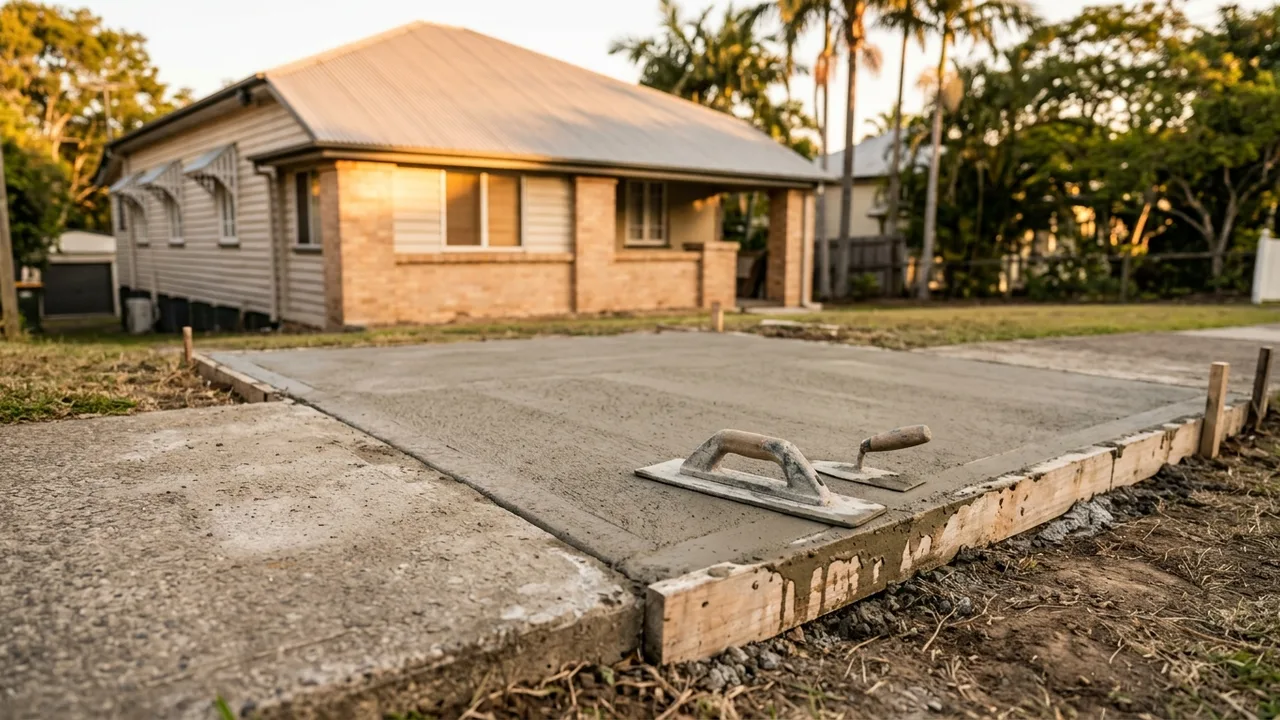
Autumn (March to May): Conditions start improving from March onwards. By April and May, morning temperatures in the Bulimba and Cannon Hill area are typically in the mid-teens to low twenties, afternoons stay comfortable, and rainfall is lower than summer. This is a genuinely good time to pour. The concrete has time to cure without fighting the weather.
Winter (June to August): Brisbane winters are mild by Australian standards. It rarely drops below 10°C overnight in the Inner East suburbs, and daytime temperatures are usually 18-23°C. These are close to ideal conditions for concrete work. There's less evaporation risk, curing proceeds at a steady pace, and you're less likely to be interrupted by afternoon storms. If you have flexibility in your schedule, this is the window most experienced concreters prefer.
Spring (September to November): Spring brings warming temperatures and increasing storm activity. September is still generally fine. By October and November, you're getting back towards summer conditions, with the added unpredictability of storm season ramping up. It's workable, but the window for a straightforward pour narrows again.
What changes for specific job types
The time-of-year question isn't identical for every job. A few practical differences:
Driveways and slabs: Large surface areas are most vulnerable to rapid evaporation. A driveway in Hawthorne or Morningside poured on a 33°C January afternoon without proper precautions can develop plastic shrinkage cracks within hours of finishing. Larger slabs (for garages, extensions, or shed pads) carry the same risk. These jobs benefit most from cooler pouring conditions.
Exposed aggregate surfaces: The finishing process for exposed aggregate involves washing back the surface cement while the mix is still green (partially set). In hot weather, the window for doing this correctly narrows significantly. Get it wrong and you either remove too much or the surface locks up before you can finish properly. Autumn and winter give the crew more time to work the surface.
Paths and footpaths: Smaller volume, so slightly less critical than a big slab. That said, a thin path in direct summer sun can still cure unevenly. The stakes are lower but the principle is the same.
Repairs and resurfacing: Resurfacing compounds are often even more temperature-sensitive than standard concrete mixes. Most product data sheets specify application temperatures between about 10°C and 30°C. Brisbane summers regularly exceed that upper limit for extended periods of the day.
Practical steps that reduce weather risk in any season
If you can't wait for the optimal window, or if your job needs to happen in summer for practical reasons, there are measures that help:
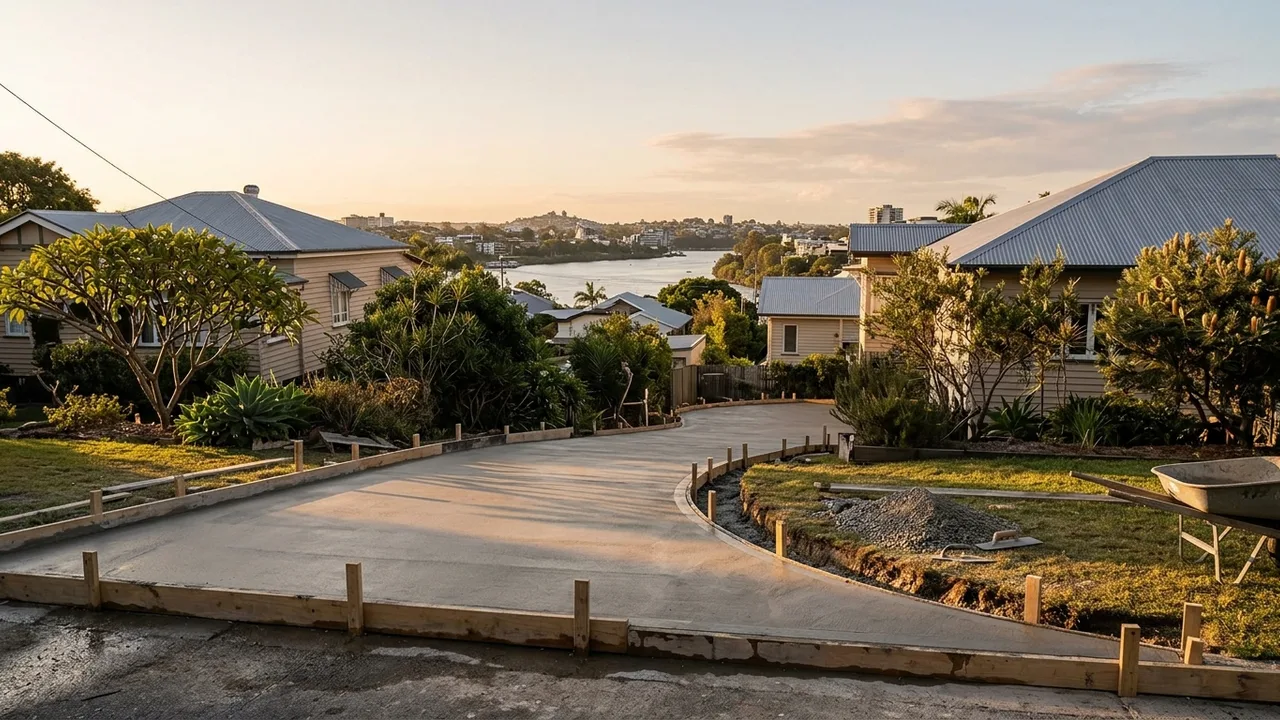
- Adjust the mix. A concretor can request a mix with a lower water-to-cement ratio, or ask the batching plant to add a retarder. This buys time before the mix stiffens.
- Schedule around the heat. Starting a pour at 6am rather than 9am can mean the bulk of the finishing work is done before temperatures peak. In the Inner East, this also means less traffic on narrow suburban streets in Bulimba or Norman Park.
- Use shade cloth or hessian. Covering the freshly poured surface with wet hessian or a curing blanket slows evaporation immediately after finishing. It's not glamorous but it works.
- Cure properly. Curing compound or regular water misting for the first three to seven days makes a real difference to final strength and surface quality. This matters year-round, but especially in summer.
- Watch the forecast, not just the day. Rain two hours after a pour can damage the surface. A good concretor checks a 48-hour window, not just the morning forecast.
None of these are complicated. They're standard practice for experienced crews. But they do add time and sometimes cost to a job, which is worth factoring into your planning.
Cost and scheduling trade-offs
There's a real world trade-off between timing and availability. Winter is the preferred season for a lot of tradespeople, which means it can be busier and sometimes harder to secure a booking for a smaller residential job in suburbs like Tingalpa or Murarrie.
Summer, on the other hand, sometimes means slightly shorter lead times, because some homeowners delay jobs precisely because of the heat. If your concretor is experienced, has the right mix adjustments available, and is willing to schedule around the weather, a summer job can absolutely turn out well.
The cost of the concrete itself doesn't typically vary by season in Brisbane. However, if a summer pour requires a specialist mix additive or significantly longer crew time due to early start requirements, that can add a small amount to labour costs. Ask your contractor to walk you through how they handle summer pours before you commit.
The honest recommendation
If you have a choice, aim for April through August. The conditions in the Inner East Brisbane suburbs during those months genuinely make the concreter's job easier and reduce the variables that lead to surface problems or early cracking. A garage slab in Balmoral poured on a mild July morning, properly cured for a week, is more likely to look good and last well than the same slab poured during a humid February heatwave.
If you can't wait, that's fine. Summer concreting happens all the time in Brisbane. Just make sure whoever you're working with has a clear plan for heat management, not just a vague reassurance that it'll be right.
Either way, get specific answers from your contractor before work starts. Ask when they'll schedule the pour, how they'll handle the curing period, and what the mix design is. A straightforward conversation about those three things tells you a lot about whether the crew knows what they're doing.
If you're planning a driveway, slab, or path in the Bulimba area and want to get a realistic picture of timing and costs, it's worth reaching out to a local concretor who works specifically in the Inner East. We can connect you with someone who does.
Quick answers